Multi-stage filtration
Sequential cartridges address different classes of contaminants: sediment, chlorine and organic compounds, and fine membranes for particles and dissolved solids where required.
Pricing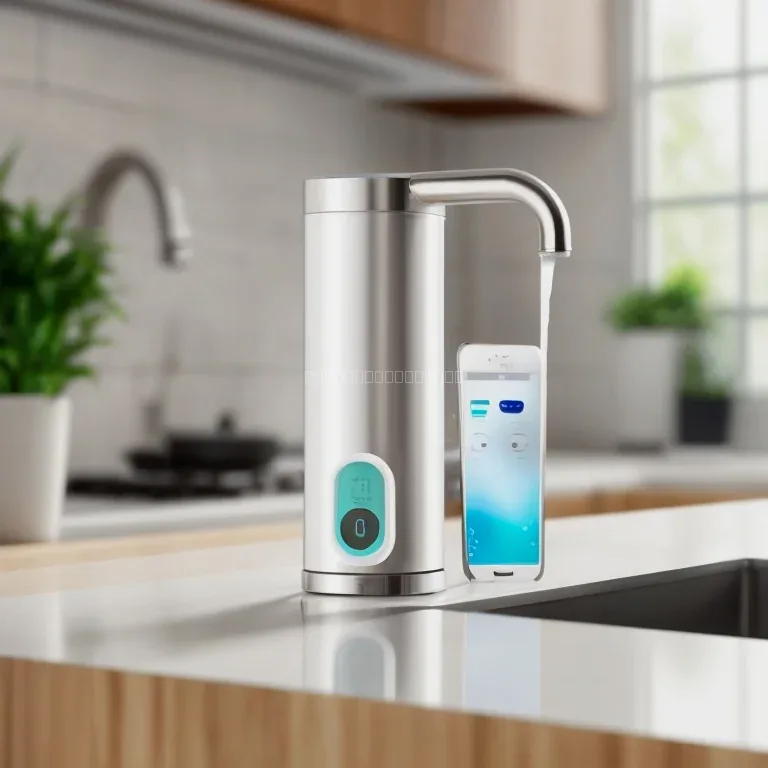
Real-time status
Aitopfilter designs and supports smart home water filtration devices that combine tested filtration media with sensor-based maintenance alerts. This information resource describes practical considerations for installation, ongoing maintenance and data privacy in a residential context.
A multidisciplinary team of product designers, water treatment specialists and customer support coordinators manage product development and service in Thailand.

Leads product roadmap and coordinates testing and certification activities to ensure components meet applicable safety and performance standards.

Advises on filtration media selection and interprets third-party lab results to inform users about expected performance under different water conditions.

Coordinates installation partners in Bangkok and manages technical support workflows for diagnostics and maintenance scheduling.
Smart home water filter device mounted under sink with mobile app dashboard
Smart water filter devices combine physical filtration with sensor-driven monitoring and connectivity to provide continuous visibility into household water quality. Typical systems use multi-stage filtration — sediment pre-filter, activated carbon for chlorine and organics, and a membrane stage such as ultrafiltration or reverse osmosis for finer particulate and dissolved solids — while built-in sensors measure parameters like turbidity, total dissolved solids (TDS) and flow. Connected features include local displays and smartphone applications that log trends, alert when filter elements approach end-of-life, and record maintenance events. For households in Bangkok and other urban areas, these systems can help track variations in municipal or stored water and recommend replacement intervals based on actual usage rather than fixed timelines. Energy use, service access, cartridge compatibility and certified test reports (for example third-party laboratory data or recognized standards) are useful selection criteria. Aitopfilter presents system specifications, installation guidance and service contacts to support informed decisions without overstating performance.
Real-time water quality monitoring
Modular multi-stage filters
App notifications and usage logs
For product specifications, service inquiries and local installation options in Thailand contact Aitopfilter. Business ID: 0731680834863. Office and service address are listed below. Information updated 26-05-2026.
82-84, Thanon Itsaraphap, Bangkok District, Bangkok 10600, Thailand
Smart domestic water filters integrate established filtration media with electronic sensors and connectivity. Sensors commonly monitor flow, TDS and turbidity, providing data to onboard logic or mobile apps that estimate remaining filter life and record water quality trends. Installation can be under-sink, on-counter or at point-of-entry depending on household needs.
Select systems based on source water quality, required contaminant reduction and daily household consumption. Compare filtration stages, sensor types, data access and cartridge availability. Check for independent test reports when possible and consider local serviceability for timely replacements.
Designed for single fixtures like kitchen sinks, often with a compact multi-stage cartridge and simple sensor readouts for usage-based replacement.
See installation guidesInstalled at the main water entry, these provide filtration for the entire household and are sized for flow and pressure requirements; sensors may be optional or attached at key points.
See installation guidesCombine point-of-entry pre-filtration with point-of-use polishing stages and connected monitoring at critical outlets for a tailored approach.
See installation guidesFeatures to evaluate include sensor accuracy, cartridge replacement workflow, data retention and integration options, compatibility with local water chemistry, and available service plans. Energy consumption and maintenance frequency affect operating cost over time.
Sequential cartridges address different classes of contaminants: sediment, chlorine and organic compounds, and fine membranes for particles and dissolved solids where required.
PricingTDS, turbidity and flow sensors enable condition-based maintenance and generate usage metrics that inform replacement timing.
PricingWi-Fi or Bluetooth connectivity provides remote monitoring, firmware updates and alerts through a mobile application while preserving local controls.
PricingEasily replaceable cartridges and access to certified service technicians reduce downtime and maintain expected filtration performance over time.
Pricing